Key Takeaways:
- Building a custom home is worth it when you value control over the outcome more than speed and certainty, and you can plan around an 8-to-14-month timeline.
- Your land drives cost more than your finishes do. Slope, soil, access, and utility distance can swing total cost by 15% to 25% before you pick a single cabinet, and Wasatch County runs 15% to 20% higher per square foot than Utah County.
- The design phase decides the outcome. A scope change made mid-construction costs 2 to 3 times what the same change costs during design, so the families happiest with their build are the ones who treated design as the main work.
Who It’s For:
- Utah families who have settled on a location and want to know whether building beats buying before they request a single bid.
- Buyers weighing an older existing home against new construction and trying to compare the two costs on equal footing.
- Anyone who already owns land or is close to buying it and wants a realistic read on budget swings, financing, and timeline before breaking ground.
Most people ask whether building a custom home is worth it and want a single number back: a cost-per-square-foot figure, a timeline, a verdict. That number doesn’t exist. Any custom home builder who hands you one before knowing your land, your priorities, and your timeline is guessing.
The honest answer is that building a custom home is worth it when you value complete control over the outcome more than you value speed and certainty going in. That is the trade-off, and you should have it clear in your head before you compare a single quote.
What Are You Optimizing For?
Buying an existing home gets you into a house faster, with a known price and a known move-in date. A custom build gets you a floor plan, finishes, and a home layout built around how your family lives, at the cost of a longer timeline and an overall budget that depends on decisions you haven’t made yet.
Which one is the more cost-effective move depends on your constraints. A family that has decided on a location, has a realistic budget range, and can tolerate 8 to 14 months before move-in tends to come out ahead with a custom build. A family that needs to be in a home in 60 days, or hasn’t settled on where they want to live, is optimizing for something custom construction can’t give them.
Why Sticker Price Is the Wrong Comparison
Comparing the total cost of a new build against the price of an existing property as if they’re the same kind of number is where most people get the decision wrong.
An existing home’s price is fixed at closing. A custom home’s cost is a range that narrows as decisions get made, and the biggest factors are your land and your site improvements. Slope, soil conditions, access, and how far utilities have to run can move total cost by 15% to 25% before you’ve picked a single cabinet. A builder who quotes you a tight per-square-foot number before you own land is either working from a generic template or telling you what you want to hear.
A construction loan funds the build in draws as work is completed, and the down payment is measured against the contract price plus the land rather than a listing price. If you already own land, its equity can cover part of that down payment. Set aside extra cash beyond the contract price, because unexpected expenses tend to surface once site work starts.
An existing home hides costs of its own. A 20-year-old roof, an HVAC system on its last few years, a kitchen that needs to be gutted to work. Those show up as repair bills after closing. Custom construction puts them on the table up front.
In Utah, county matters more than most cost guides admit. Building in Wasatch County (Park City, Midway) typically runs 15% to 20% higher per square foot than Utah County, driven by site access, permitting complexity, and labor logistics in mountain terrain. Lot prices in high-demand areas move with market trends, so an estimate from the past year may already be stale. A Wasatch County estimate that comes in higher than a Utah County one isn’t a sign something’s wrong.
What Personalization Buys You in Your Dream Home
Custom homes offer personalization that no existing house can match, and that’s the clearest financial argument for building. It’s also the hardest to put a number on. You stop paying to undo somebody else’s decisions. Any other house reflects whatever the previous owner needed, their family size, their taste, the layout that worked for their life. A personalized design lets you put the primary suite where you want quiet, size the mudroom for how your family enters the house, and skip a formal dining room you’d never use in favor of a bigger kitchen.
A hidden room off a closet is a fun feature that costs money, usually $15,000 to $40,000 depending on how it’s built, and it won’t move a resale appraisal. A well-placed kitchen work zone, natural light in the rooms where you spend your evenings, or storage that matches how you live day to day tends to matter more to long term value than a headline feature. Prioritize the choices you’ll notice every day over the ones that look good in a listing photo. A well-designed custom home tends to hold higher resale value because of layout and light.
Energy efficiency is where personalization and long-term savings line up most cleanly. A newly built home means you’re choosing insulation, windows, and HVAC systems that meet current standards from day one, instead of retrofitting an older envelope. An energy-efficient shell and a right-sized HVAC system lower your utility expenses for as long as you own the home, and high-quality materials chosen up front mean lower maintenance costs than an older house will ask of you. They’re also far cheaper to build in correctly than to add after the fact.
The Design Phase Decides More Than the Construction Phase
If there’s one place people underestimate how much a custom home build affects the “worth it” math, it’s the design phase. The value of building looks like it happens on the job site, framing going up, finishes going in. In practice, the decisions that determine your total cost, your timeline, and how much you like living in the house get made weeks before you break ground.
Design runs 6 to 10 weeks of active work before permit submission, covering floor plans, elevations, specs, and the permit drawing set. A scope change made during design costs you a redrawn plan and a delayed submission. The same change made mid-construction costs 2 to 3 times as much, because it means undoing finished work rather than adjusting a drawing.
A home builder who rushes you through design to get a shovel in the ground is optimizing for their schedule rather than your outcome. The families who end up happiest with the decision to build are usually the ones who treated design as the main work and the build process as the execution of decisions they’d already made carefully. A sound decision-making process before the shovel hits the dirt is what saves money later.
Timelines in Utah
Plan on 8 to 14 months from initial consultation to keys for a custom build in Utah. A simple build on a flat, accessible lot can close in under 10 months. A mountain site, a complex or unconventional scope, or a jurisdiction with a slower permitting process can push that to 16 to 18 months.
That range reflects the spread you’ll see across different lots and scopes. Custom builders who give you one fixed number regardless of your site aren’t accounting for the conditions that drive the timeline.
Where We See This Play Out
We built Roots Builders on the idea that custom home clients deserve the same financial discipline a lender would demand from a builder. That means clear budgets with itemized allowances, documented scope changes instead of verbal ones, and a final product that matches what was presented at the start. The idea comes from watching hundreds of building projects from the finance side: the projects that stayed on budget were the ones with accountability built into the whole process, not a general contractor with a good reputation and nothing behind it.
We’ve also stayed deliberately small. We’ve completed 31 projects since 2021, with active projects capped so each one gets full attention instead of being one of thirty a project manager is juggling. A builder managing dozens of active projects can’t give each one the same oversight. Decisions get rushed, and your preferences get averaged into whatever’s fastest to build. If you’re evaluating custom builders, ask how many projects they’re managing right now, and ask them to answer questions about change orders before you sign. The right builder will have a process to point to. Those answers tell you more than a portfolio does.
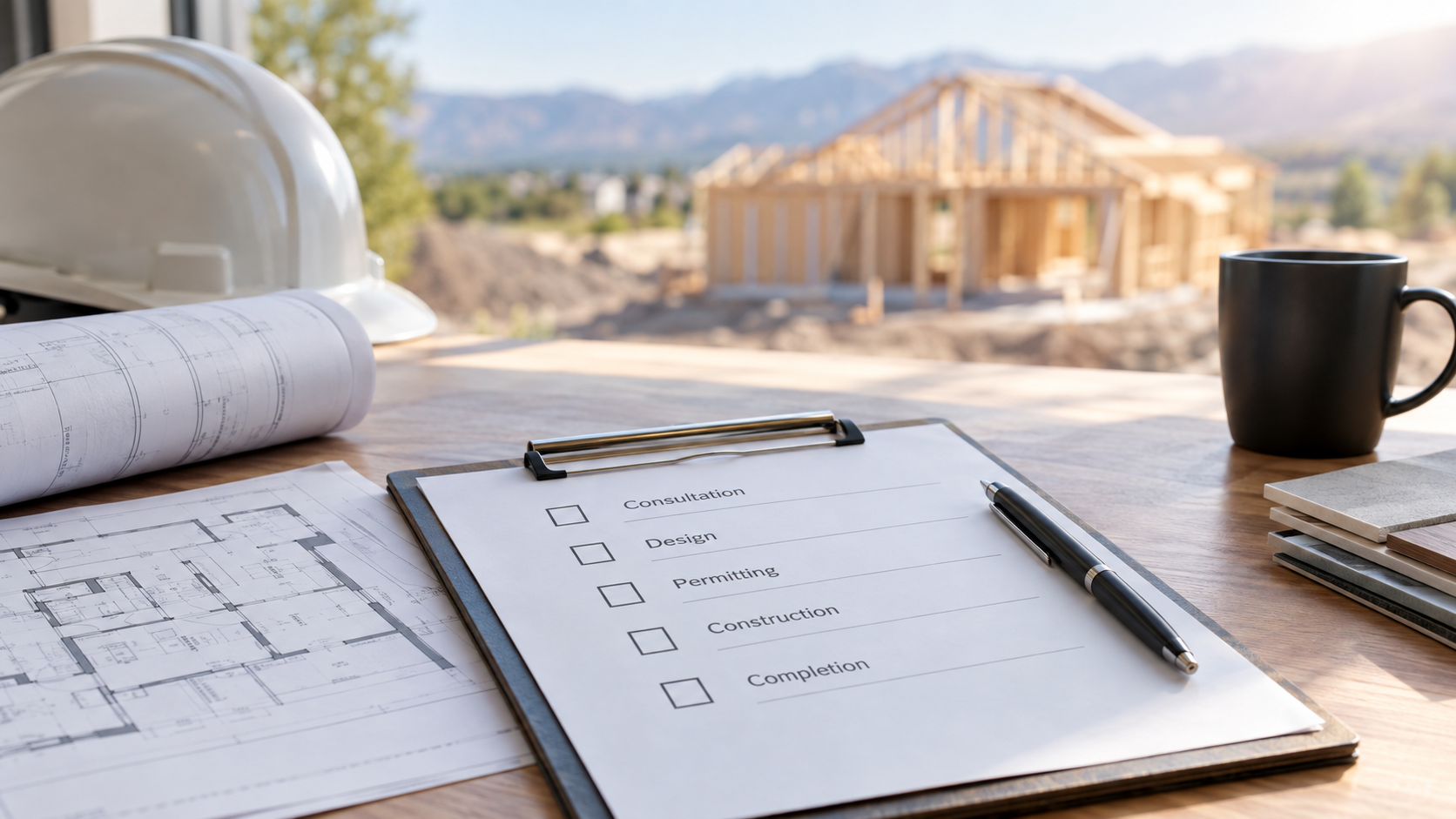
Decision Checklist
Before you commit to either direction, run through this.
- Budget flexibility. Can your overall budget absorb a 15% to 25% swing depending on what your land needs?
- Timeline tolerance. Does an 8-to-14-month build fit your moving timeline, or do you need to be in a home sooner?
- Location certainty. Do you already own land, or do you still need to find it? Have you settled on where you want to live?
- Non-negotiables. What two or three features would you regret not having in ten years?
If your answers point toward flexibility on timeline and certainty on location, building tends to be the stronger financial and personal move. If you need speed more than customization, buying makes more sense right now.
Should You Build?
Builders love the phrase dream home. The more useful test is whether a custom home fits the life you have and the budget you can prove on paper. Building is worth it if you’re optimizing for a home that fits your life instead of one you’ll spend years adjusting to, and you can plan around a realistic 8-to-14-month timeline with an overall budget that accounts for your land and your square footage. It’s a harder decision to model than “build versus buy,” but it determines whether you’re happy with the outcome three years in.
If you’re weighing the decision and want a clearer read on what it looks like for your land and your budget, schedule a consultation. That’s where the numbers replace the estimates.