Who It’s For
- Families looking to build a fully customized dream home instead of buying a pre-made floor plan.
- Homeowners in Utah County or Wasatch County want a realistic understanding of the custom home process and timeline.
- People planning a future build who want to learn how budgeting, permits, and design decisions affect construction timelines.
Key Takeaways
- Families looking to build a fully customized dream home instead of buying a pre-made floor plan.
- Homeowners in Utah County or Wasatch County want a realistic understanding of the custom home process and timeline.
- People planning a future build who want to learn how budgeting, permits, and design decisions affect construction timelines.
How long does it take to build a custom home? It’s the first real question most people ask, right after they decide they’re done settling for floor plans that don’t fit how they actually live. The honest answer is that from breaking ground to move-in, Roots Builders’ custom home construction runs 36 to 43 weeks. That’s the build itself. Add the design and permitting work that comes before it, and you’re looking at a full timeline closer to 10 to 14 months from your first consultation to keys in hand.
That range reflects many variables. Those include the county you’re building in, how quickly design decisions are made, and what’s happening with labor and material availability during your build window; all of these play a role. A simple home on a flat lot in a well-developed part of Utah County can come in under 10 months, and a complex build on a sloped lot in Wasatch County can stretch toward 14.
Here’s how the custom home building process works, what drives the timeline at each stage, and what you can do to keep your project moving.
The Pre-Construction Phase Where Timelines Are Won or Lost
Most people think about construction when they think about how long a build takes. The pre-construction phase is when your timeline is set. Decisions made here determine whether your construction project runs smoothly or stalls out mid-build.
We came into this industry from real estate finance. One pattern we saw repeatedly on the funding side was builders rushing through pre-construction to get shovels in the ground faster. Those projects had more change orders, more delays, and more frustrated homeowners. The builds that went well were the ones where careful planning happened before anything was built.
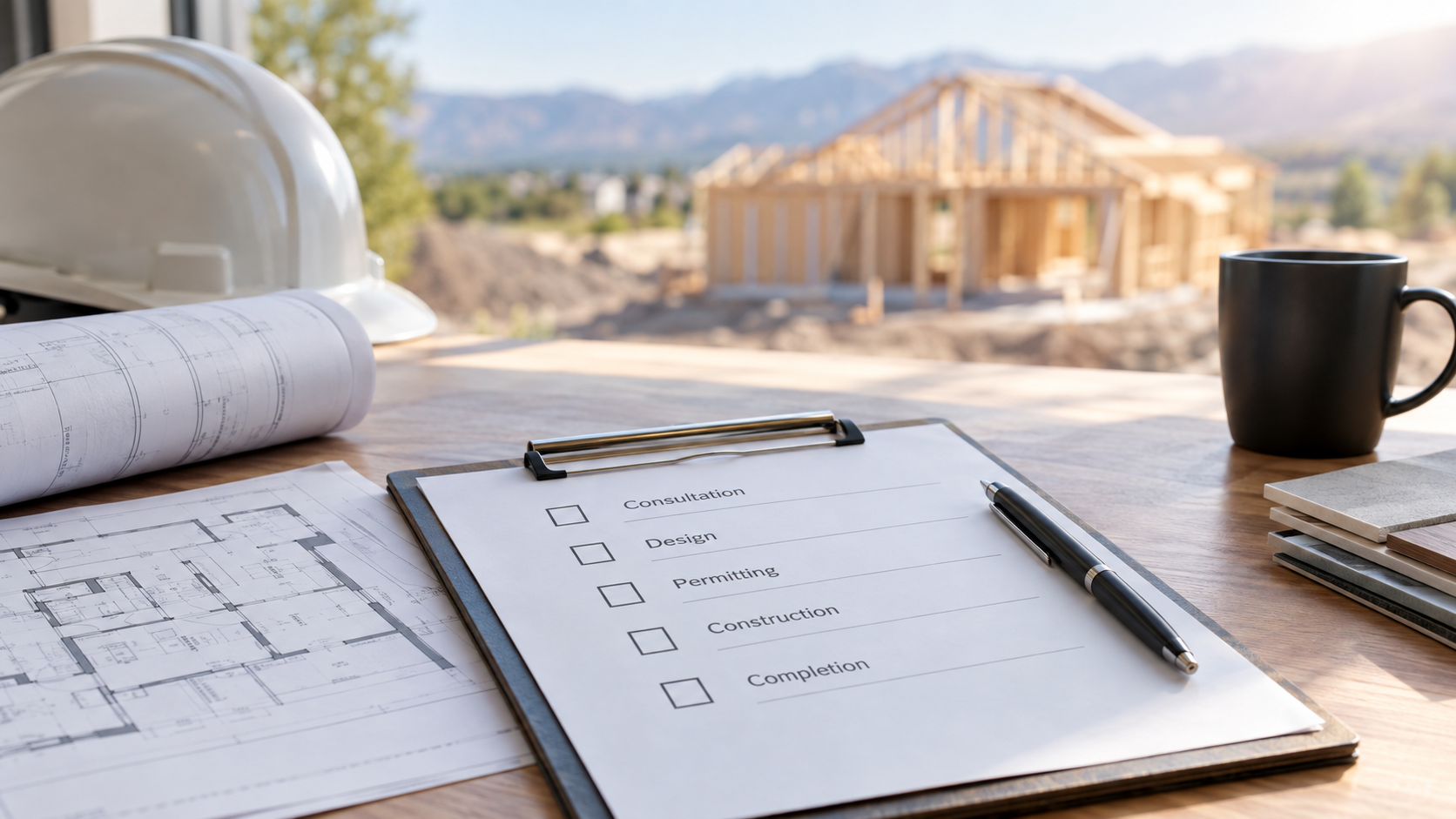
Pre-construction covers three things. Finalizing your design plans, clearing zoning regulations, and obtaining your building permits. The length of this phase depends on how quickly you and your builder can make decisions and how long the local permitting process takes in your county.
Design and Floor Plan 6 to 10 Weeks
Your floor plan doesn’t just determine how your home looks. It determines what the build actually costs and how long it takes. Scope changes mid-construction cost two to three times what the same decision would have cost during this phase. Getting the design right here protects your budget and your construction timeline.
Expect six to ten weeks of active design work before your plans are ready for permit submission. Some clients move faster. Others need more time when choosing materials, selecting finishes, or working through complex layouts.
The Permitting Process 4 to 12 Weeks, Depending on Where You Build
Building permits timelines vary more than most people expect. Utah County processes permits faster than Wasatch County. A straightforward plan with complete documentation moves faster than a complex submission with revisions. Your home builder should be managing this process proactively and have a clear sense of what the local jurisdiction typically requires.
This is also where zoning regulations get sorted. If your lot has any complications around soil tests, easements, or setback questions, those surface here. The earlier your builder identifies them, the less they affect your schedule.
The Custom Home Construction Timeline: 36 to 43 Weeks from Ground to Move-In
Once you have permits in hand and site work begins, the home building process follows a defined sequence. Each stage has to be completed before the next one can start. Here’s how that breaks down for a Roots Builders custom home.
Site Work and Foundation 5 to 6 Weeks
The moment site work begins is the moment your home stops being a plan and starts being a place. This stage covers excavation, septic installation, footings, foundation pours, damp proofing, window wells, and backfilling. It determines the structural integrity of everything built on top of it.
A sloped lot takes longer than a flat one. Mountain sites in Wasatch County typically add time here compared to developed subdivisions in Utah County or Lehi. If your lot has complex terrain, your experienced builder should have accounted for this in the timeline before you broke ground.
Framing 6 to 8 Weeks
Framing is the stage where your home’s structure takes shape. Erecting walls, installing the roof structure, and setting the physical shape of every room. Skilled workers move fast during this phase when the plan is clear, materials are on-site, and weather conditions cooperate.
This is also when most homeowners want to walk the site constantly, and they should. Decisions about ceiling heights, window placement, and room flow are easier to visualize once the frame is standing. What you see in a plan can feel very different in real life.
Rough-In 5 to 6 Weeks
Rough-in covers everything that runs inside your walls before they’re closed. Plumbing, electrical, and HVAC systems. This stage requires coordination among multiple trades working in sequence.
Interior walls start going up during this phase. Once rough-in inspections are passed, insulation and drywall follow. This is one of the key stages where your builder’s subcontractor relationships matter most. Trades that show up on schedule keep the project moving.
Exterior Finishes 7 to 8 Weeks
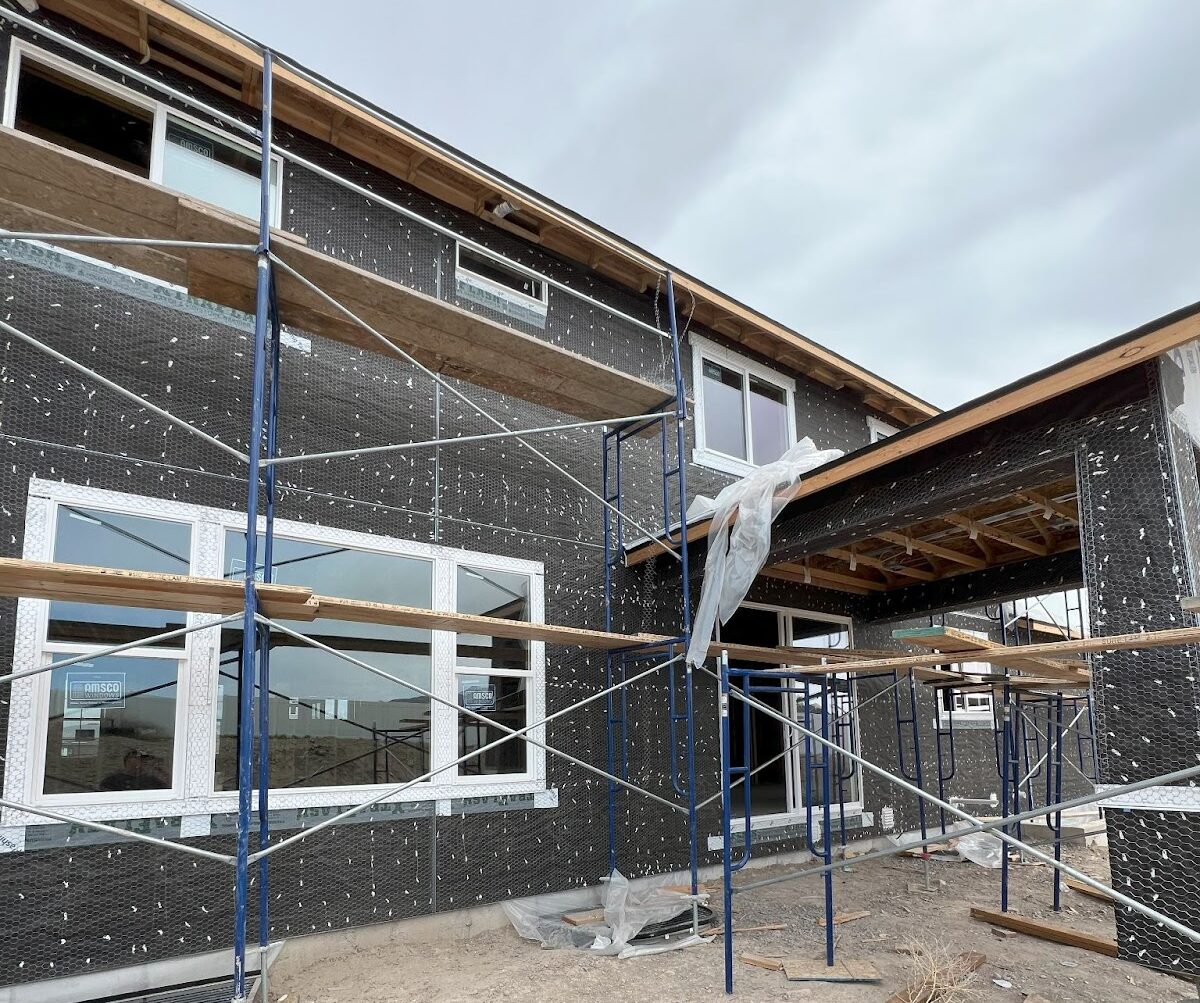
Exterior finishes run parallel to some interior work. This includes installing windows, siding, roofing, and any exterior stone or trim. The 7 to 8 week estimate covers most home configurations, though complex exterior designs or supply delays on specific materials can push it out.
Weather conditions have more impact here than at any other stage. Utah winters can slow exterior work. It’s worth having a conversation with your builder about groundbreaking timing so exterior work lands in a favorable window.
Interior Finishes 10 to 11 Weeks
This is the longest phase of the build, and the one that most homeowners look forward to most. Interior finishes include flooring, cabinetry, countertops, plumbing fixtures, lighting, paint, trim, and every detail that makes a house feel like a home.
This is where finishing touches like backlit vanities, custom built-ins, heated floors, and hidden rooms get installed. The choices you made during the design phase get executed here. If you deferred decisions, this phase slows down while you make them. Good planning earlier means this phase runs on schedule.
Most custom homes spend 10 to 11 weeks on interior finishes. More complex homes with extensive millwork, custom tile, or specialty installations can run longer.
Touch-Ups and Final Inspections 3 to 4 Weeks
Final inspections, touch-ups, and the final walkthrough happen in the last three to four weeks. This stage covers the punch list, meaning anything that needs adjustment, correction, or completion before you move in.
A thorough builder addresses the punch list systematically and doesn’t rush a homeowner through the final walkthrough. This is your chance to review everything against the plan. Clear communication at this stage matters just as much as it did at the beginning.
What Affects the Building Process Timeline
Two builds with identical square footage can have very different timelines. Here are the factors that matter most.
- Design complexity. A straightforward floor plan with standard finishes moves faster than a complex layout with custom millwork, specialty tile, or engineered structural elements. Complex homes take more time at every stage.
- Decision-making speed. Homeowners who make selections quickly keep the build moving. Delayed decisions on flooring, fixtures, or finishes create holds that affect skilled workers and scheduling downstream.
- Material availability. Supply chains affect every construction project. Your builder should be ordering materials with enough lead time to avoid holds. For long-lead items, ordering during the pre-construction phase is standard practice.
- Labor availability. A builder managing too many active projects splits attention and subcontractor scheduling. We deliberately limit our project count so each build gets the attention it requires.
- Site conditions. A flat lot in a developed area builds faster than a sloped lot with complex excavation requirements. Building in Wasatch County adds time and cost compared to Utah County, typically 15 to 20% more per square foot, and permitting timelines reflect that difference.
- Unexpected events. Even well-managed builds run into unexpected events. Weather delays, permit revisions, or a material arriving damaged can each add time. The builders who hit their timelines most consistently plan for contingency rather than against it.
Planning to Avoid Delays on Your Build
The single best thing a homeowner can do to keep a build on schedule is to show up to the design phase ready to make decisions. The builds that run long almost always trace back to deferred choices in the design phase.
Start planning before you have land, if possible. Knowing your budget, your general floor plan preferences, and your non-negotiable features gives your builder something to work with from day one. Having your lot selected and site conditions evaluated before design begins removes a major variable from the schedule.
Clear communication with your builder throughout the construction process is the other half of avoiding delays. You should know what’s happening on your site every week. If something changes, you should hear about it from your builder before you notice it yourself.
Spec homes move faster because every decision is pre-made. A full custom home puts those decisions in your hands. That’s the trade. You get a home built exactly for your life, with every detail chosen by you. In exchange, the process requires your engagement throughout.
Final Thoughts on the Custom Home Building Journey
Building a custom home is the longest, most detailed construction project most people will ever undertake. The homebuilding journey requires patience and a builder who treats your project with the same rigor they’d want applied to their own.
At Roots Builders, we built this company specifically because we watched how poorly the industry managed client expectations from the finance side. Transparent timelines, proactive communication, and realistic expectations from the start aren’t extras. They’re the foundation of a build that goes well.
If you’re ready to start planning your dream home in Utah, we’d welcome a conversation. Schedule a consultation and let’s talk through your site, your vision, and what a realistic timeline looks like for your specific project.